Perhaps the toughest challenge in recent weeks to Nigel Farage’s Reform UK is the Labour Government’s announcement to curb party donations from overseas donors. More stringent rules on political interference in elections were part of the Representation of the People Bill, introduced to the House of Commons on 12 February and expected to become law by the next general election.
Currently donors must be on the Electoral Register, the Electoral Commission tells us. Foreign gifts are banned.
The move to clamp down on “foreign actors” gained more urgency after Nathan Gill, former Reform UK leader for Wales and ex-Ukip MEP, was jailed for 10.5 years last November for taking bribes to support the Russian government.
But another motive for the bill’s timing could be to hamper donations to Reform UK, specifically from Christopher Harborne, the overseas billionaire who often dips into his back pocket for Nigel Farage.
A further spur to action might have been Elon Musk’s threat to donate US$100mn to Reform – how given even the current gifting rules we do not know.
Harborne recently made a one-off £9mn payment to Reform, but he has also made other donations to a total of some £14mn. His generosity makes him the largest donor in British political history.
Harborne has also been linked to the aircraft used to transport Farage to the Maldives as part of an attempted stunt to protest against the transfer of the Chagossian Islands to Mauritius.
From the patchy financial information available, it seems that Harborne made his fortune in the world of crypto-currency. The new bill, as well as limiting overseas donations to £200,000 a year, will also curb payments with crypto-currencies.
Harborne has been based in Thailand since 2019 and has joint UK-Thai citizenship.
Harborne, together with the hedge fund manager George Cottrell and MP Richard Tice have been the major backers of Reform, their funding reported to amount to 75% of all the party’s donations.
Through loans from his company Tisun Investments, Tice, deputy leader of Reform and MP for Boston and Skegness, has propped up the party.
Last year Tice converted £613,000 of his loans to the party into a gift. Although this was not new money it will have improved Reform’s company balance sheet.
An important move given that Reform is a limited company controlled by Farage.
The effort to attract other super-rich donors has faltered, apart from the few who are happy to cough up the odd £200,000.
Nigel’s side-hustles
Meanwhile Farage continues his side-hustles to supplement his salary as MP for Clacton.
According to the House of Commons register of MPs’ financial interests, Farage recently earned wages from:
- GB News Ltd (Presenter)
- X Corp (formerly Twitter)
- Various articles (paying approximately £4,000 per month)
- Telegraph Media Group
- Meta Platform
- Cameo (video recordings paid for video greetings)
- Brand Ambassador for Direct Bullion
- News PTY
- Various speaking engagements
- Payments for several visits outside the UK (US, Abu Dhabi, Maldives, Switzerland)
North East popularity
While Reform is now experiencing a slight dip in the opinion polls nationally, the North East region is the exception. The party leads there in popularity, according to a new You Gov opinion poll, with 29%, followed by Labour and the Greens with 18% each.
Farage has high hopes, he says, of taking over Tyne and Wear, in the all-out elections of Newcastle, Gateshead, South Tyneside, and Sunderland.
All is not completely hunky-dory for Reform in the North East however. On 5 March Labour’s Julie Griffiths won a Durham County Council by-election in Murton ward, re-taking the seat from Reform.
The result reduces the Reform seats on the council to 60, raising the number of Labour councillors to five.
North East news
The region’s news is peppered with local scandals featuring Reform. Here’s a few that made the local headlines.
Reform-controlled Durham County Council has taken flak for cancelling its March full council meeting, preventing residents and members from publicly questioning the local authority.
Reform, said it “won’t have a meeting for the sake of it”, reported the BBC.
Cash-strapped Northumberland County Council has just agreed a six-figure salary for a new director.
There are allegations about Reform’s Barry Elliott, a Blyth businessman and councillor on Northumberland County Council, who, before his election, closed several companies leaving £6mn in debts.
Countrywide
The local controversies mirror similar coverage around the country.
Corey Edwards, the Reform candidate for the Welsh Senedd’s Pen-y-bont Bro Morgannwg constituency, is standing down for mental health reasons after a photograph was published showing him apparently making a Hitler-style Nazi salute.
The Romford MP Andrew Rosindell, who had defected from the Tories to Reform earlier this year, lost a court case in which he claimed he had a right to stay in the constituency office premises financed by the Conservatives.
Reform’s new housing spokesperson Simon Dudley has been removed from his post after calling the Grenfell Tower a “tragedy” but that “everyone dies in the end”.
Chris Parry, the party’s mayoral candidate for Hampshire and The Solent was sacked after calling Shomrim (the Jewish Neighbourhood Watch) “cosplayers” like “Islamists on horseback”.
The Reform Mayor of Hull and East Yorkshire Luke Campbell promptly set up a £1mn community fund after his election last May.
Eyebrows were raised when one of the five projects to benefit (a £5,000 grant) was his son’s community football club.
Members of Reform-led Kent County Council have voted to increase their allowances by 3.8%.
There are rumblings of discontent within the party, which controls two councils in Northamptonshire. Less than a year since the elections, two Reform councillors in West Northants have quit the party to sit as Independents.
In North Northants, another two councillors defected to the new Restore Britain party.
With a build-up of concerns about the conduct of Reform MPs and councillors, the question being asked is: how rigorous is Reform’s vetting process for its candidates?
As well as the various scandals, there are other questions: will Farage’s close associations with Donald Trump and king of the Manosphere, Andrew Tate now become a liability, as their stars begin to fade?
And could the threat by national treasure Carole Vorderman, to stand against Farage at the next General Election, result in a final blow to his image?
Local Elections
Given that Reform received £43.5mn in donations, grants and loans last year they should have no worries about paying for their campaign for the upcoming local elections taking place on 7 May.
So far the by-election results have been inconclusive.
On 9 April the Greens won the Cliftonville by-election on Kent County Council, replacing a Reform councillor who was jailed for the coercive control of his wife.
On the other hand, Reform won a by-election for Luton council on 2 April, its first seat in the town.
A litmus test will be on 16 April with the Cramlington South West ward by-election for Northumberland County Council, the Reform incumbent having stepped down due to kidney cancer.
Given the unpopularity of both Labour and Tories at present, Reform could still seize more local power in the May elections.
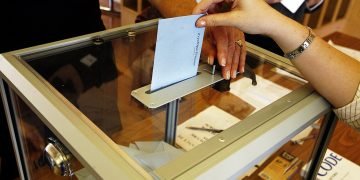
It all depends on those silent moments with biro poised in ballot boxes around the country when voters decide our fate. Or the decisions of those who for their own reasons don’t vote at all.