
Remembering HAL
As we enter the era of artificial intelligence, humanity is facing a threat of a nature and a scale it has never experienced before.
And to make the threat even more serious, it will engulf us at the very time that climate change and nuclear proliferation are both beginning to accelerate – and at a time when right-wing regimes across the world are becoming ever more dominant
That latter factor (the move to the right) is, at this particularly critical juncture in human history, an even more harmful trend than it might normally be because those rightist governments (including the USA and Russia) are intent on undermining the rules-based international order and its institutions (the United Nations etc) – and that will make any attempts to mitigate the AI, climate change and nuclear proliferation problems much more difficult.
In some ways, AI is arguably the single biggest threat to humanity.
AI technology is now developing at an exponential rate – with some key performance metrics doubling every six to eight months – three times more rapidly than initially predicted.
Within the next year or so, AI will be capable of performing almost everything a human can do on a computer. That is likely to lead to an “automation cliff” where AI begins to handle entire multi-step workflows autonomously.
By the end of this decade, it is likely that AI will be able to exceed human performance in most economically valuable tasks.
By 2045 (and potentially much sooner), AI will reach its so-called “singularity” point (where its cognitive capacity will be greater than all human intelligence combined!).
AI systems are now beginning to help write their own codes. This will mean that they will soon be able to automate the majority of their own research and development, which would vastly accelerate AI expansion and the wholesale displacement of humans in the economy.
Although climate change is likely to kill many millions and of course nuclear proliferation could also end up killing further millions, AI may prove to be the threat that most fundamentally and permanently affects humanity – our society, our nature and even our identity as humans.
For AI is likely to impact the entire world in every conceivable way – not just economically and culturally, but also psychologically, cognitively, socially, politically, militarily, environmentally and in terms of our survival as an independent species.
So here (in this unparalleled five part series) is the first ever comprehensive account of what lies in store for us (unless the world’s politicians wake up and take action):

Mass unemployment
The most recent studies (especially some of those published in 2025 and early 2026) are far more pessimistic than more naïve ones published in slightly earlier years.
It is now clear that AI is likely to generate mass unemployment – and could do so by the early 2030s.
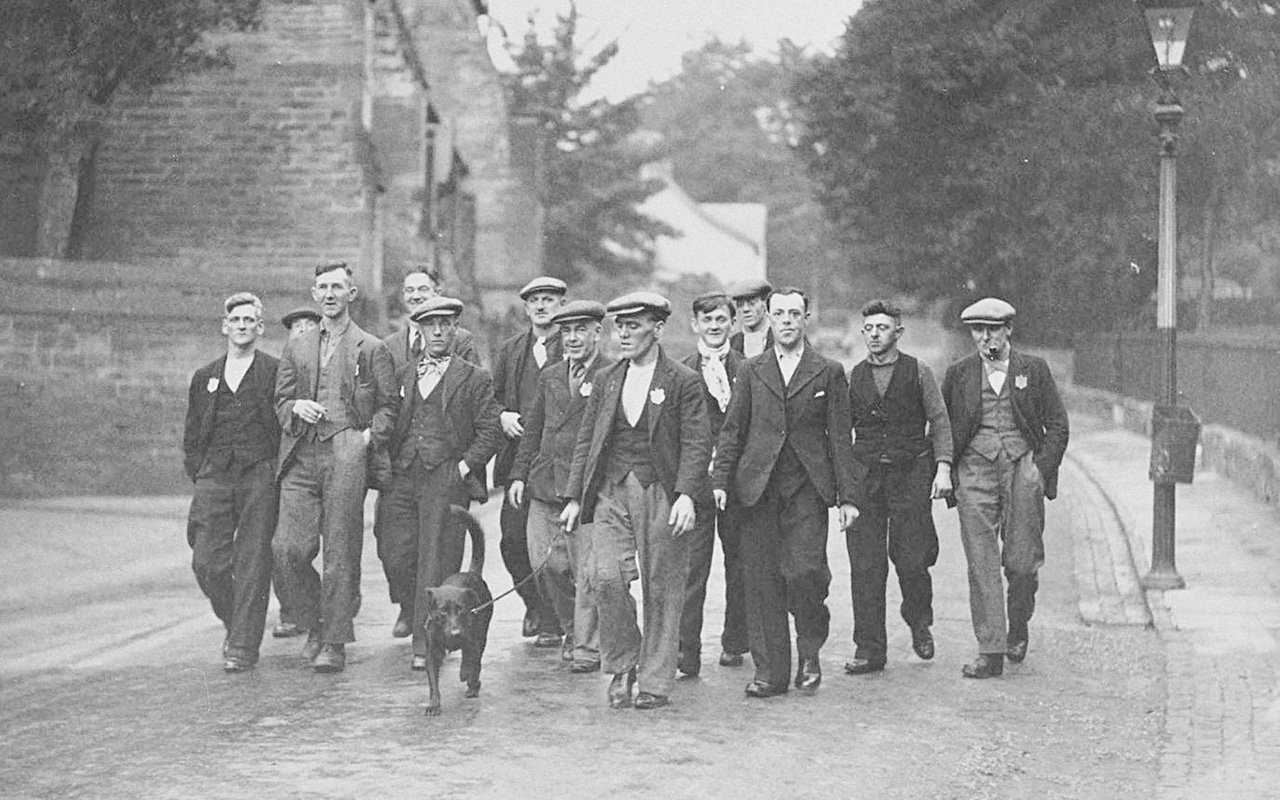
Although all countries will eventually be seriously affected, it is advanced economies like the UK which will initially be hit hardest.
For instance, in January 2026, a study of five AI-exposed economic sectors in four advanced countries, by the large investment banking company Morgan Stanley, found that those sectors (including health, automotive, transport and retail) suffered unexpectedly high AI-induced net job losses in 2025. The UK and Japan have so far been the hardest hit (down 8% and 7% respectively).
The Morgan Stanley report said that “the magnitude of net job loss” had “surprised” them.
AI-induced unemployment will impact different sectors of the world’s population differently and at different speeds.
In many economies, especially advanced western ones, women will be particularly badly affected – because they are disproportionately concentrated in clerical, administrative, customer service and retail jobs which are most vulnerable to AI displacement.
Young people will also be disproportionately affected – because entry-level recruitment is likely to become massively depressed due to AI. That terrible impact has already begun to be felt.
Indeed, according to a November 2025 global survey from the International Data Corporation (IDC), two-thirds of companies expect to reduce entry-level hiring.
The June 2026 Morgan Stanley report on what happened in 2025, confirms that young workers will be disproportionately hit.
It found that “the number of roles eliminated and not replaced was highest among early-career employees or those with no previous experience”.
Another large section of the population which will be disproportionately excluded from the new AI-driven job market will be those who lack the cognitive abilities to effectively and safely manage AI systems. Indeed since 2024, there has been a huge increase in companies using so-called ‘cognitive ability assessments’ to screen applicants for AI-dependant jobs.
In the USA (and almost certainly elsewhere) between 60 and 80% of candidates fail those tests (albeit sometimes unfairly) – and therefore also fail to find a job in the expanding AI-dependant sectors of the various economies. Some analyses suggest that, by 2036, up to 80% of the working age population might not be cognitively able to work in an AI-proofed job in an AI workplace (which by then would account for the vast majority of offices).
In net terms, it is conceivable that, by 2040 or 2050, in all advanced economies (like the UK), AI-induced (and by-then also AI-robotics-induced) unemployment will leave up to half or more of the normal working population without jobs (unless governments take radical remedial action – controversial though crucial actions that we will describe in detail in part 5 of this series).
Competition for jobs will also drive down many wages – and will largely destroy employees’ bargaining power. Employer power will therefore become totally dominant.
Opinions and studies vary regarding the speed and scale of AI-induced job losses over the next 10 to 30 years.
One leading international expert on AI, computer scientist Ben Goertzel believes that in the coming years, up to 80% of human jobs will be displaced by AI.
The Indian American multi-billionaire, Vinod Khosla, also believes that around two-thirds of human jobs may be eliminated by AI by 2050. But somewhat optimistically, he sees that as a good thing not a bad thing for humanity. He regards it as liberating humankind from the burdens of work!
Goldman Sachs predicts that up to 50% of AI-vulnerable jobs will be displaced by AI.
But the American billionaire and leading hedge fund founder, Ray Dalio believes that AI will displace workers faster than new roles emerge – and will lead to unprecedented inequality – benefiting only the wealthiest 1% to 10% of Americans, while at the same time displacing millions of workers across many industries. Clearly, what happens in the US will also happen in many many other countries – including the UK.
Another estimate, published in 2024 by the Institute for Public Policy Research, predicts that 60% of all administrative jobs will be taken over by AI.
What’s more, by 2040,40% of computer programming functions will be taken over by AI, according to a World Economic Forum report.
By 2036 (ie in ten years time), its likely that around 55% of UK jobs will not be capable of being done by AIs – but by 2046, that figure is likely to fall to only 30%. That means that, unless governments take drastic remedial action, up to 45% of the UK working population is likely to be permanently unemployed by 2036 and that by 2046, that already totally unsustainable jobless figure could rise further!
The consumption collapse crisis
As AI increases unemployment, strengthens corporate power and depresses wages, there will inevitably be a very substantial decline in the population’s purchasing power.
Despite likely AI-generated increases in productivity (and consequent product cost reductions) the substantially jobless cash-poor population is unlikely to be able to buy back what the mainly ‘AI-staffed’ corporations will have produced.
Although partly AI-generated products will cost less to produce, companies will need to pay extremely high (and potentially unaffordable/unsustainable) taxes to enable the state to care for the large percentage of the population which will not be in employment. Some observers have suggested that the unemployed (or indeed everyone!) should be paid a ‘universal basic income’ (UBI) by the state.
What’s more, the state’s spending obligations are likely to also very substantially increase in other ways – quite apart from the often proposed UBI. Mass unemployment will inevitably increase both ill-health, crime and civil unrest (and thus respectively, government health and security expenditures).
Additionally, those sections of the population which are still in employment will not only face downward wage pressure – but also increased taxation (to help pay for UBI etc for the expanding ranks of the jobless). So even employed people may well have diminished purchasing power.
AI-induced unemployment and downward wage pressure are therefore likely to lead to major and long-lasting recessions in which other sectors of the economy (not just AI-vulnerable ones) suffer, thus causing company closures and additional job losses and economic crises and unpredictability.
Increased poverty, negative equity and bank failures
Reduced public buying power is likely not to be the only AI-induced cause of recession. That’s because AI-linked unemployment and downward wage pressure is also likely to reduce people’s ability to buy homes and pay their mortgages. A major reduction in demand for property is therefore likely to push property prices down – and that will, in turn, put many homeowners into negative equity and increase mortgage defaults. That, in turn, will devalue housing-related securities – and, when that happens on a mass scale, bank failures often follow, thus triggering further financial crises.
In turn, that is likely to lead to decreases in trade with and investment in and aid to the developing world.

Thus AI is likely to generate very widespread poverty globally – both in the West and in the global South.
Tomorrow, in the second part of this unique five-part survey of the emerging AI threat, we will look at how AI is likely to further increase war and global instability