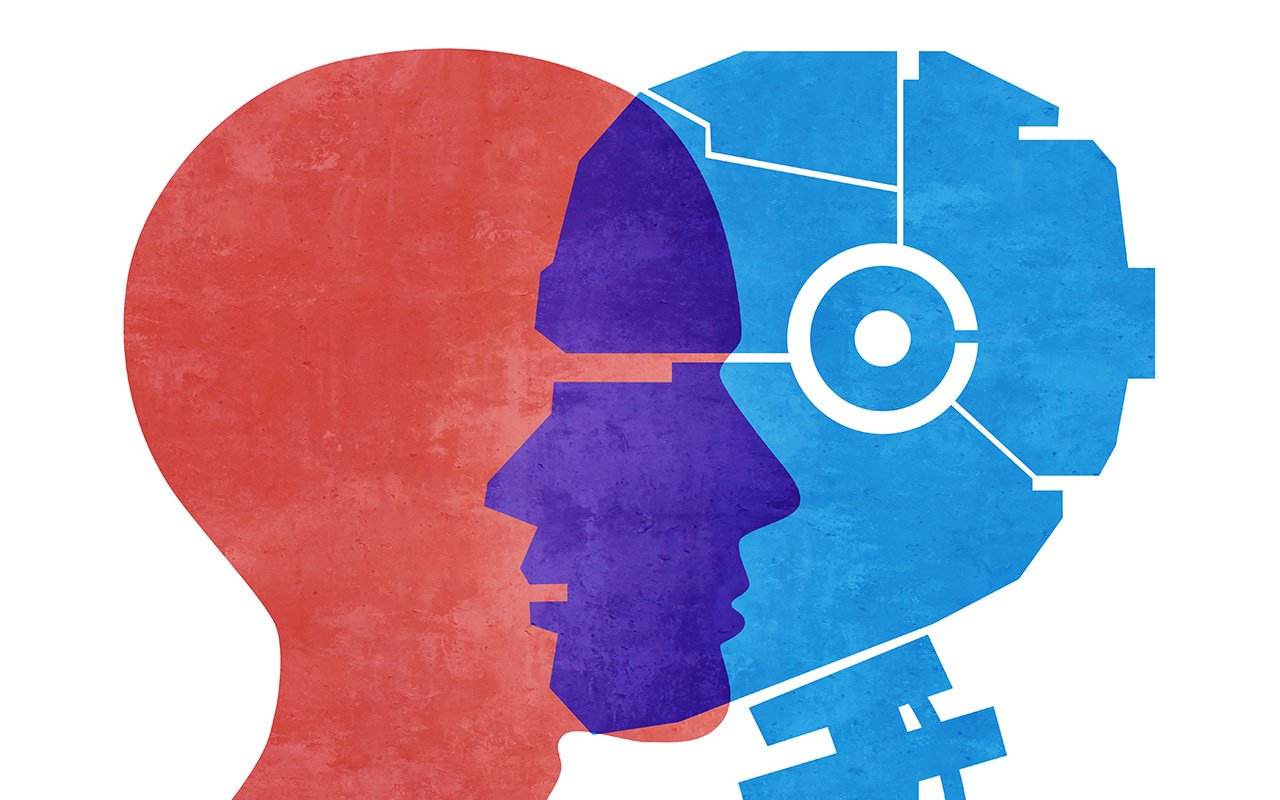
Although, theoretically, rogue AI systems could ultimately pose an existential threat to humanity, a potentially much more likely existential-like AI threat would be to human identity and society, as currently understood and valued.
Indeed humanity could ultimately end up becoming subservient to AI.
Sophisticated aliens from outer space (if they exist) almost certainly don’t pose a threat to us – but highly intelligent AI systems one day (perhaps within a decade or two) may well do so.
That’s because AI is likely to directly and indirectly fundamentally change the way humans think, behave and relate to each other. Indeed, the process has already started. AI will change the very essence of what it is to be human – so, in that sense, it poses a genuine existential threat. Within the next few decades, AI systems and robots are likely to become the thinkers, the inventors (and even perhaps our conquerors!) – and we may well end up becoming merely their (one day potentially surplus-to- requirements) pawns.
So how is some of this (or all of this) likely to come about?
First of all, it is already known that constant AI use can generate what scientists call ‘cognitive atrophy‘. That’s a mental decline in which humans use AI as an intellectual and mental crutch – and when, consequently, the brain’s ability to think critically and analytically is reduced.
Evidence also suggests that AI reduces humans’ memory-forming abilities.
What’s more, AI overuse can make it physically much more difficult and energy-consuming for humans to think deeply. It can also make people more instinctively ‘conservative’ (with a small ‘c’) – because they come to over-rely on and over-trust what their ‘mega intelligent’ AI ‘colleagues’ tell them (What scientists call ‘automation bias’).
By humans continuously offloading complex thinking tasks to AI (what’s known as ‘cognitive offloading‘), they start to lose their core cognitive skills and begin to lose the ability to solve problems without an AI crutch (a loss known as ‘skill decay’).
Constant AI use will also further erode human attention spans – and thus make us even more dependent on AI systems.
All these very serious problems (which will alter the nature of our humanity) will be very difficult to mitigate – because competition between companies and indeed between countries will prioritise short-term dominance, efficiency and productivity over medium-to-long-term very serious damage to people, society and humanity as a whole.
The use of AI as a cognitive crutch to do our analytical and other thinking for us will also reduce our wish and ability to be curious – our human desire for knowledge.
Indeed the ease with which knowledge (rather than wisdom and understanding) can now be obtained online has already reduced its status and its perceived value. Cognitively and intellectually, it’s already turned champagne into Bucks Fizz, so to speak. AI will merely complete the transformation by reducing knowledge’s status from cognitive Bucks Fizz to mere tap water!
But it’s in the field of human relationships (romance, love, partnerships, child-rearing, etc) that AI will have one of its most serious impacts.
Research (in particular a 2024 study of 496 AI users) has revealed that high levels of satisfaction and emotional interaction with AI chatbots correlated with worsening real-life interpersonal communications.
Indeed, disturbingly large numbers of people have now become emotionally dependent on chatbot partners. There are now at least 16 million English language companion chat bot interactions globally every day – and in the UK around 35% of young people have developed or are developing a relationship with an AI companion chatbot. Surveys have revealed that at least 10% of UK youngsters have intimate or sexual interactions with their AI companions. Recent research shows quite clearly that use of AI chatbots (and constant reliance on AI systems) erode people’s ability to feel empathy for other human beings or to try to understand their needs or to be patient with them.
Because AI companions or AI ‘colleagues’ don’t argue, are always cooperative, always obedient and rarely say no, their human friends gradually lose their ability to handle real-life interactions with real partners (and real children).
The interactions with their AI friendship companions and their AI work partners lead to them having unrealistic expectations when it comes to human-to-human interactions – and so little-by-little they withdraw from the real world and become even more dependent on the AI one.
Because of AI’s impact on interpersonal relationships, an AI future is likely to have grave implications for the survival of the family as the basic unit of society.
AI-driven unemployment and consequent financial challenges are likely to prevent many young people from forming stable long-term relationships and is also likely to deter many from having children. AI domination is set to continue the trend created by increasing digitisation and increased social isolation and distraction which is already partially responsible for a very substantial drop in human intimacy over recent decades. Indeed, a US survey has revealed weekly or more than weekly sexual relations has, over the past 34 years plummeted from 55% of adults to just 37%. Indeed the percentage of young people in America who haven’t had sexual partners for several years is now 15% – more than double what it was in the 1960s (6%)
Similar trends have been detected elsewhere in the western world.
Indeed, in the US, a quarter of under-40s (especially less affluent ones) believe that AI partners could replace real-life ones in the future.
But AI will also have some other very serious indirect social and psychological consequences – mainly through the medium of the mass unemployment that it will almost certainly unleash.
Research from many countries (including the UK) show quite clearly that mass unemployment (even if a universal basic wage is available) is likely to generate very high levels of mental illness – especially among men.
Long-term unemployment often leads to serious depression (31%), anxiety (47%), alcohol abuse (23%), increased drug use, domestic violence (a 30% increase), family breakdown (the risk increases by at least 50%) – and even suicide (at least double the rate for employed men).


As well as increasing the frequency of mental illness, AI-induced job losses and economic stress will also substantially push up the number of people suffering heart attacks, strokes, diabetes and cancer.
A study of past recessions (written by me and published in The Independent) showed quite clearly a causal relationship between economic stress and increases in those diseases. What’s more, increased poverty and parental stress harms children (both in the womb and in their formative years).
Mass unemployment (even with a benefits system or UBI) would be likely to create a very substantial increase in crime – especially burglary, theft, robbery and shoplifting. Several pieces of academic research published in the early 21st century demonstrate that a 1% increase in unemployment leads to a 1-2% increase in property crime. But long-term unemployment not only increases property crime – but also substantially increases violent crime by between 1.5 and 4% for each 1% increase in long-term unemployment.
Unemployment also often generates serious political instability. Modern history is awash with examples. The most serious was of course the mass unemployment in Germany (30%) in the early 1930s which led directly to the rise of Hitler, World War Two and the Holocaust. In this century unemployment (due to the 2008-2013 recession) led to political instability and a large increase in mass protests (a 229% increase in the Middle East and North Africa, a 71% increase in Europe and a 48% increase in sub-Saharan Africa).
In the Middle East and North Africa, mass youth unemployment was a major cause of the so-called Arab Spring protests which led to the overthrow of governments in Tunisia, Egypt, Libya and Yemen. And, in Syria, the protests – partly triggered by very high youth unemployment – and the resultant government repression led to a 13 year long civil war which cost well over 600,000 lives.
AI impacts on education and democracy
AI is likely to have a huge impact on education. Students at schools and universities worldwide are already becoming largely reliant on it. Well over half of UK and US high school and university students now use AI to heavily draft – or, less often, completely write their essays. This has resulted in a huge increase in factual errors in submitted essays etc (caused by AI ‘hallucinations’). What’s more teachers and university lecturers routinely fail to spot the errors – or even spot that the content is AI-produced or heavily AI-drafted.
AI is also leading to a loss of core skills both at high school and undergraduate level – and is already compromising the credibility of some university degrees.
What’s more, Artificial Intelligence threatens the education sector in other ways. Because, in many sectors of society, knowledge and traditional intellectual skills are unlikely to be as highly valued as they have been in the past, young people’s motivation to progress at school let alone attend university may well decline in the future.
And if mass AI-induced unemployment becomes the norm, the main future-employment-oriented incentive to study may well partially evaporate. Certainly, AI is already causing declines in students enrolling for some courses.
More broadly, as I mentioned earlier, information (albeit often error-ridden information!) is now so easily obtainable (via AI etc) that culturally it has, metaphorically, turned knowledge from champagne into tap water. In pre-AI times and certainly in pre-Internet times, personal knowledge was hugely valued and truly knowledgeable people enjoyed high cultural status. Being knowledgeable was something to be aspired to. Knowledge was, so to speak, cognitive champagne. But AI has now, in effect, turned knowledge into tap water – because it can be so effortlessly obtained in a matter of seconds. That fundamental transformation is likely to have the most profound intellectual consequences – for human curiosity/inquisitiveness levels, for human information processing and analysis capacity – and for humans’ ability to express themselves. AI is perhaps the final act in what I term the ‘Denaissance‘.
The very relationship between humanity and truth is being undermined by AI-generated misinformation, errors and deep-fake images. Most humans will increasingly be cognitively unable to tell the difference between genuinely accurate information and images and total fakery.
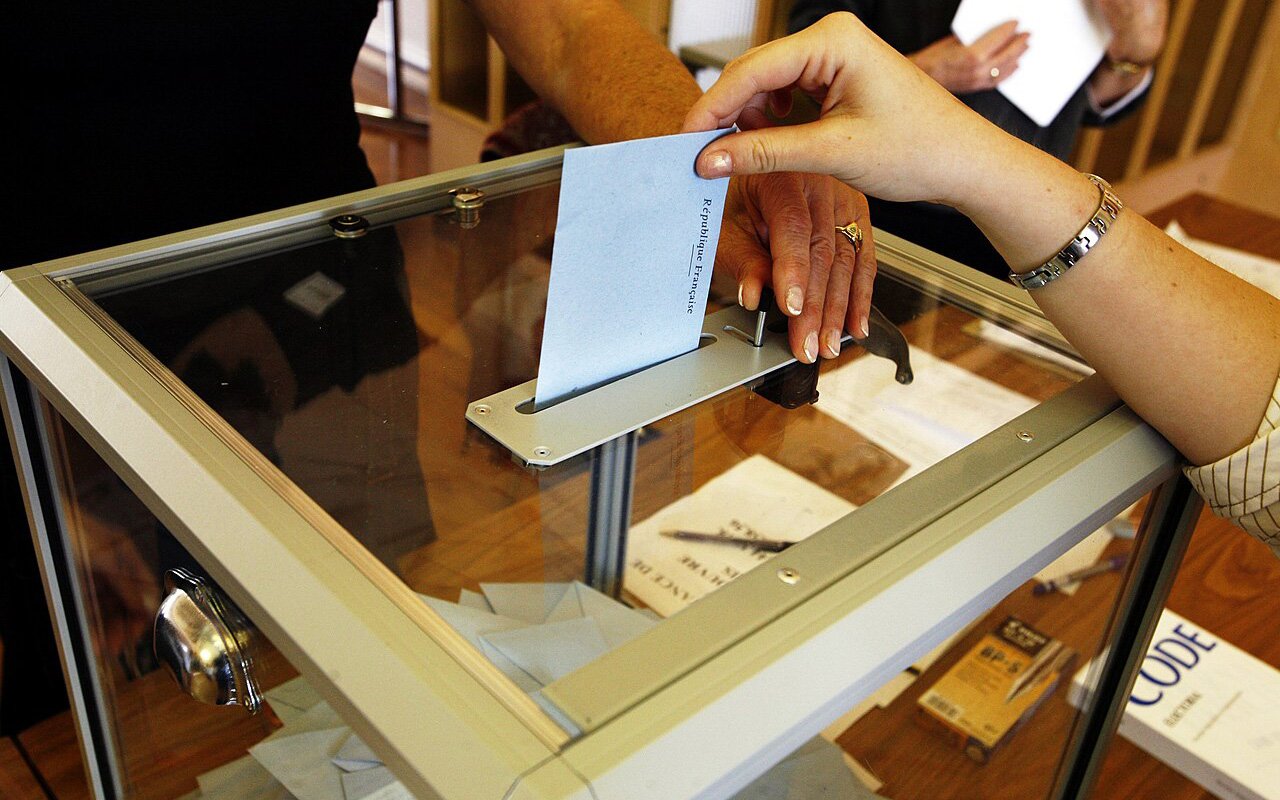
That has not only dire implications for education and culture – but also for politics and democracy. For it is likely to increase levels of cynicism and societal and political disengagement, thus destroying the foundations of society itself.
If people feel they can’t trust anything and that there is no longer such a thing as accurate information, proper informed political public debate will become impossible and that would liquidate the very foundations of democracy itself.
Any public inability to tell the difference between reality and AI-generated fake information will clearly give more dishonest and ruthless politicians carte blanche to lie (and to dismiss accurate criticisms of themselves as fake news). AI will also allow fake news to be generated and disseminated on a far greater scale than humanly-generated fake news was in the past. Indeed, over the past few years there has already been a substantial increase in fake news and deep-fake photo and video content dissemination. AI also allows politicians to micro-target bespoke political propaganda at individual voters – and allows a country’s enemies to intervene in elections on a greatly increased scale.
So, in myriad ways, Artificial Intelligence will massively degrade the nature of society and destroy the very essence of what it means to be human.
If you found today’s article of interest (but have not yet read the previous two articles in the series (on AI’s likely economic impacts and its military/security ones), you can access them. below:
Tomorrow, in the fourth part of this unique five-part survey of the emerging ai threat, we will look at how AI will inflict huge damage on planet earth itself
Friends of Bylines Network
There has never been a greater need for grassroots journalism that investigates the stories that really matter, holds power to account and champions the voices of everyday citizens. We are proudly powered by volunteers but what we do isn’t free.
STAND WITH US for independent, citizen-led journalism that makes democracy stronger, and you will even get some exclusive benefits.