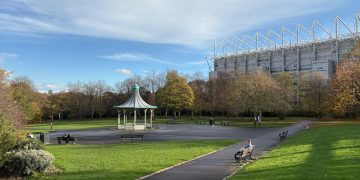
Newcastle is set to host matches at St James’ Park, adding to a growing calendar of high-profile sporting events – from the Great North Run to Rugby World Cup fixtures – all reinforcing the region’s credentials as a sporting powerhouse.
Local leaders have responded with ambitious promises. The Leader of Newcastle City Council has cited figures projecting an economic boost of £117.7 million, while the regional Mayor has reiterated her aspiration to brand the North East as the UK’s premier ‘Region of Sport.’
But as headlines proclaim opportunity and investment, it’s worth pausing to ask: what does this ambition really mean? How reliable are the economic projections? And most importantly, how can we ensure the benefits are sustained long after the final whistle blows?
Beyond the headlines: interrogating the figures
The projected £117 million economic boost is undeniably striking. Yet such estimates often oversimplify reality. Typically, they count all related spending; on tickets, hospitality, transport, and merchandise; as a net gain to the local economy. But much of this may simply displace other spending or leak out to suppliers and investors based outside the region. Without proper context, the headline figure risks being misleading. Newcastle’s Euro 2028 hosting costs alone are estimated at £14.5 million – public money that comes with significant opportunity costs. Could that investment have a greater long-term return if channelled into grassroots sport, health infrastructure, or inclusive community programmes?
Who really benefits?
Large-scale events tend to cluster around city centres and elite venues, areas that aren’t always accessible or inclusive for everyone. If the North East wants to host responsibly, investment must reach those who need it most: young people, disadvantaged communities, and underrepresented groups. This must go beyond token gestures. A genuinely bold and progressive bid would aim to make Euro 2028 the most inclusive and accessible tournament in the region’s history – one that serves not just fans and visitors, but also local communities.
Defining the ‘Region of Sport’ – vision or slogan?
‘Region of Sport’ is a powerful phrase, but without definition it risks becoming little more than a tagline. Is the goal elite performance? Widened participation? Better public health? Economic development? Social inclusion? Or a synthesis of all? Without a clear, shared vision backed by measurable outcomes, the ambition remains aspirational rhetoric. Delivering real change will require a strategic framework, strong cross-sector partnerships, transparent governance, and accountability grounded in evidence and local priorities. Yet early signs raise questions. The Combined Authority’s decision to allocate £500,000 for a feasibility study is one such example. With growing teams of senior staff and strategic advisers, does the Authority not yet have the internal capability to begin shaping this vision itself?
Learning from elsewhere
Other regions show how sport can be harnessed for long-term transformation. Greater Manchester has successfully aligned sport with public health, using physical activity to tackle inequality and improve wellbeing. In Aarhus, Denmark, sport is integrated into cultural and urban planning, contributing to vibrant, cohesive communities. The Gold Coast in Australia built the 2018 Commonwealth Games around a legacy-first model, ensuring that infrastructure and programming would outlast the event. Lille in France has used sport as a platform for innovation and economic diversification, while Portland, Oregon prioritises equity and access at the heart of grassroots sport.
These examples show that legacy doesn’t happen by accident. It must be embedded from the outset – with sustained investment, community engagement, and clear goals beyond the event itself.
Assets: more than the big moments.
The North East already has a strong foundation. From elite venues to community hubs, the region boasts a rich tapestry of sporting assets. Stadiums like St James’ Park in Newcastle and the Stadium of Light in Sunderland are more than football grounds. They are civic spaces, capable of hosting international fixtures and grassroots tournaments alike. The region is also home to facilities like the Vertu Motors Arena for basketball, the Gateshead International Stadium for athletics and rugby league and Silksworth Ski Centre for winter sports training. These venues represent a diverse and unique infrastructure that few regions can match. Equally important, though often overlooked, are the hundreds of local leisure centres, community pitches, school sports halls, and volunteer-run clubs that form the bedrock of participation. While many require investment and modernisation, they remain essential access points, especially for those who may never attend a stadium or elite academy. A strategic regional audit of these assets – physical, financial, and human – is urgently needed. It should identify both gaps and strengths, helping to guide equitable investment and planning.
Then the intellectual infrastructure alongside its physical assets; the North East is home to some of the UK’s most respected academic and vocational institutions in the field of sport. Yet too often, these institutions operate in silos – rich in expertise but disconnected from the region’s wider social, health, and economic strategies. Northumbria University, for instance, houses the internationally recognised Centre for Sport and Exercise Science and Medicine (SESAME), specialising in biomechanics, performance, and health outcomes. Newcastle University contributes significant interdisciplinary research, particularly in public health and physical activity. Durham University is among the top-ranked nationally for sport and exercise science, with strengths spanning psychology, sociology, and physiology. The University of Sunderland supports community sport initiatives and coaching development, linking sport directly to education and outreach. Beyond higher education, the region’s further education sector also plays a vital, but often overlooked, role in talent development. Colleges such as Gateshead and New College Durham deliver vocational programmes in sports coaching, leisure management, and fitness instruction, helping prepare the next generation of professionals who keep the sector moving at every level. These are more than training centres. If properly integrated into a coherent regional strategy, they could become engines of social mobility, health improvement, and economic resilience. Stronger links between academic research, vocational education, and grassroots sport would help to close the gap between knowledge and impact – ensuring that what is taught in the classroom benefits people in the community.
Governance and geography: an unresolved tension
The question of governance cannot be ignored. At present, the North East Mayoral Combined Authority, led by Mayor Kim McGuinness, does not include Teesside, which is governed separately under the Tees Valley Combined Authority. This division may be administrative, but its consequences are practical. Teesside has a proud sporting heritage and significant infrastructure, including community clubs and training centres. To exclude it from regional planning is to weaken the very idea of a ‘Region of Sport.’ Collaboration across these political boundaries is not only desirable but essential. If Tees Valley’s Mayor Houchen shares the vision of building sport into a regional growth strategy, then joint planning, shared investment, and aligned legacy goals could create a truly integrated ecosystem – one that reflects the North East as it is lived, not as it is mapped.
From ambition to action
So, is the current evidence base strong enough to justify full commitment to the ‘Region of Sport’ ambition? Not yet. The idea is powerful. The potential is real. But the planning so far lacks depth and coordination. Economic impact projections are often headline figures with little grounding in the lived reality of local economies. Community consultation remains surface-level. Institutional partnerships are underdeveloped. And crucially, there is no clearly defined legacy strategy. Now is the moment to shift from vision to substance, to build the foundations needed to turn ambition into transformation. That means conducting a comprehensive audit of the region’s existing sports assets and participation levels, not just in major cities but across towns, suburbs, and rural communities. It means understanding how sport intersects with health, education, transport, and employment – and aligning investment accordingly. It also means developing transparent, meaningful impact metrics that go beyond GDP or GVA. We should be measuring improvements in physical activity rates, mental health, youth engagement, community pride, and access to sport for underrepresented groups. Only then can we truly evaluate whether we are building a more equitable and dynamic sporting region – or just hosting a few well-attended events.
A time to reflect – and act
As the build-up to Euro 2028 begins, this is not just a time for celebration. It is a moment to reflect, to challenge assumptions, and to plan with intent. If approached with courage, creativity, and collaboration, the ‘Region of Sport’ vision could transform the North East; not just in sporting terms, but in social, economic, and civic life. But that transformation will not happen on the back of slogans or one-off tournaments. It will depend on long-term thinking, inclusive planning, and meaningful investment that reaches every corner of the region. The time to act – and to act wisely – is now.

CLICK HERE TO DONATE TO OUR CROWDFUNDER
HELP US BECOME STRONGER SO THAT WE CAN CONTINUE TO DELIVER POWERFUL CITIZEN JOURNALISM!