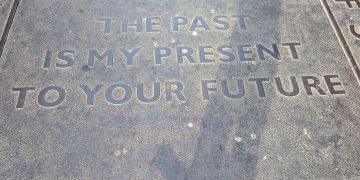
When I left school, I made the mistake common to young men throughout history: I decided I ought to do something glamorous.
At sixteen, glamour seemed to come in only a handful of approved varieties. You could be a racing driver, a secret agent, a rock star or a pilot. Since nobody was offering me a Formula One car, MI6 wasn’t returning my calls and my musical ability was largely confined to ruining hymns (at public school, a daily service was compulsory), I settled on flying.
High standards in the RAF
There was, however, one slight obstacle. Learning to fly was expensive and my financial resources at the time could comfortably be expressed as loose change. Fortunately, the Royal Air Force offered flying scholarships. Their idea was simple enough: they would teach promising young people to fly and, with luck, some of them would become RAF pilots later. It sounded splendid. What I hadn’t appreciated was that before they entrusted you with an aircraft worth more than a few quid, they wished to establish that you were not, in any meaningful sense, defective.
So it was that I found myself reporting to RAF Biggin Hill for what I innocently imagined would be a straightforward assessment. I had pictured a doctor glancing at an eye chart, tapping me on the knee with a small hammer and declaring, “Yes, that’ll do.”
The RAF had rather higher standards.
For five days they subjected us to an examination process that made medieval inquisitions seem a little cursory. They tested eyesight, hearing, reflexes, reactions, coordination, stamina, judgement, leadership and psychological suitability. If there was a bodily function capable of measurement, someone in uniform was measuring it.
The medical examination alone appeared to have been designed by people with an unhealthy interest in human anatomy. Every cavity was investigated. Every joint was manipulated. Every organ was apparently invited to submit a written report. They baulked at doing biopsies or catheterising the heart, but everything else was fair game.
Astonishingly, they accepted me, in spite of my performance in the intelligence tests and interview.
Learning to fly
Some weeks later I was assigned to Newtownards Airport in Northern Ireland and began flying lessons.
Before that, however, I had a familiarisation flight in a Chipmunk trainer.
If you’ve never seen a Chipmunk, it looks exactly like the sort of aircraft in which brave young men were taught to fly during a period when aviation safety was still regarded as a largely theoretical concept.
As I approached the aircraft, the instructor tossed something towards me. “Put this on.” It was a parachute. Now, receiving a parachute shortly before boarding an aircraft is not especially reassuring.
This particular parachute doubled as the seat cushion. You wore it on your backside and sat on it simultaneously. The arrangement produced a posture that can best be described as medically inadvisable; you waddled like a duck when you walked. After the flight, forgetting I was still wearing it, I attempted a vigorous stretch and very nearly castrated myself.
The aircraft at Newtownards was more civilised.
It was an Ercoupe, a small two-seater that, compared with the Chipmunk, felt almost luxurious. It possessed upholstery and everything. Even an ash tray (though my flying instructor smoked a pipe, and insisted on banging out the bowl on the outside during flight, with the canopy open, hurricane and all).
Then followed weeks of instruction. Flying turns out to involve an astonishing number of things happening simultaneously. You must monitor instruments, maintain headings, judge speed, watch for traffic, talk on the radio and remember procedures, all while attempting not to fall out of the sky. No in-flight movies to distract you.
The remarkable thing is that after a while it begins to seem almost normal. So normal, in fact, that one day after landing from a routine circuit, my instructor directed me towards the apron. We stopped. He unfastened his harness. Then he climbed out. “Right,” he said cheerfully. “Off you go.” And walked away.
This was not a development I had anticipated.
Flying alone
One moment I had a trained professional sitting beside me. The next I was alone in an aircraft.
I remember looking around the empty cockpit. The aeroplane suddenly seemed much smaller and lighter. The responsibility suddenly seemed much larger. The engine sounded louder. The runway looked shorter. Every instrument appeared to contain information capable of ending my life. It was like having a tiger by the tail and being expected to take it for a walk.
I taxied out. Applied power. And took off.
People often ask what your first solo feels like. The answer is that you are far too busy to experience anything coherent. You are not soaring majestically through the heavens. You are conducting an uninterrupted internal conversation.
Speed. Direction. Watch that cloud. Altitude. Trim. Speed again. What was that noise? Was that noise there before? Should it be making that noise?
For much of the flight, anxiety pops up like a fairground whack-a-mole. Just as one concern is hammered down, another appears.
Yet somehow it all works. The aircraft flies. The runway reappears. You land.
And suddenly it is over. Everyone congratulates you. You smile modestly and try to appear professional. But it was only later that I thought the whole experience through.
What unsettled me about my first solo flight was not the flying. It was the realisation that somebody else thought I was ready.
Until that moment, I had assumed readiness would announce itself. I imagined there would come a day when every landing was neat, every radio call fluent and every decision effortless. I would stride onto the airfield possessed of such confidence that solo flight would seem not merely appropriate but inevitable.
Instead, my instructor climbed out of the aeroplane while I was still waiting to become that person.
Responsibility arrived first
Looking back, I can see that this has happened repeatedly throughout my life. As a junior doctor, I assumed qualification would coincide with some profound internal transformation. One day I would wake up feeling unequivocally like a doctor. Then I would be trusted with responsibility.
The reality was the reverse. Responsibility arrived first. The feeling lagged behind.
The same thing happened in flying. The same thing happened in dentistry. At every stage, the transition was marked not by certainty but by trust. Someone more experienced looked at me and concluded I was capable before I had reached that conclusion myself.
The strange thing is that they were usually right.
What I failed to understand was that these milestones were never the end of a journey. They were the end of the beginning. The first solo flight did not signify mastery of flying. Qualification did not signify mastery of medicine. The first extraction did not signify mastery of dentistry. They simply marked the point at which somebody decided I knew enough to continue learning without constant supervision.
As it turns out, passing through the looking glass feels remarkably similar to standing in front of it. The difference is that, on the other side, there is nobody left to reassure you that you belong there.