



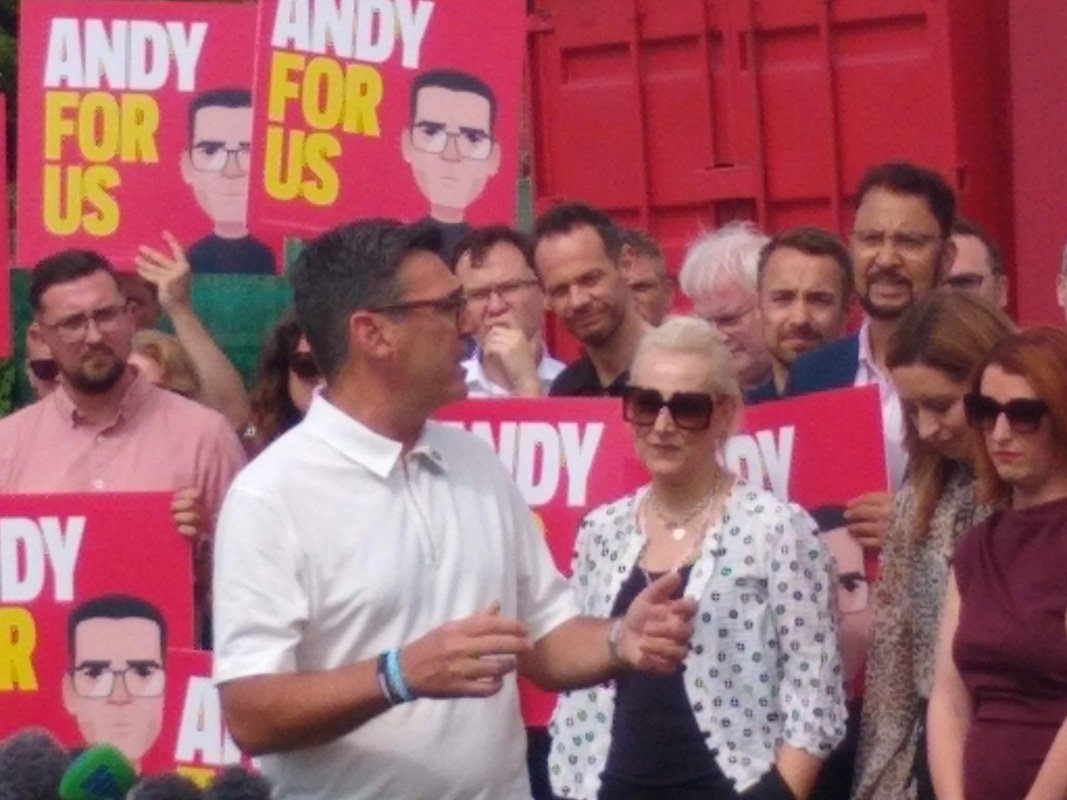
A recent report from the Harvard Kennedy Centre for Business and Government has been assessing what is needed for regional inequalities in the UK to be addressed properly and successfully. The report has also assessed to what extent the Starmer government addressed what they saw as key tasks to undertake to make Britain a fairer place before the 2024 election.
Failures under Starmer
The report notes that the UK is too centralised and that consequently the potential of some regions of the country is ignored.
It also reminds readers that before the 2024 election, Labour promised a deeper and wider devolution revolution, an industrial strategy and the establishment of a National Wealth Fund
Additionally, the report considers that as things stand, the government is currently in danger of squandering the best opportunity in a generation to address regional inequalities.
What should Andy Burnham do?
A change of leadership is imminent, so what does the report say Burnham should do?
The report also asks to what extent the government is on track at the moment to boost national growth through closing regional divides?
Historic opportunity
The authors state that there is at present a historic opportunity. Although taking this opportunity might mean spending as much as £200 billion over 20 years it can also mean boosting the growth of non-London cities, which could add £70 billion to the national economy every year.
As mentioned above, the authors produced a report at the time of the last election in 2024 and have now undertaken to assess how successful the Starmer government was in meeting the goals they set.
This stocktaking shows how limited the Starmer government was in terms of addressing regional inequalities and what priorities Burnham could concentrate on if he is to truly reduce the damaging regional inequalities in Britain today.

Friends of Bylines Network
There has never been a greater need for grassroots journalism that investigates the stories that really matter, holds power to account and champions the voices of everyday citizens. We are proudly powered by volunteers but what we do isn’t free.
STAND WITH US for independent, citizen-led journalism that makes democracy stronger, and you will even get some exclusive benefits.
Whare the government is not on track
The first recommendation was that the government from July 2024 onwards should “produce a growth and productivity strategy and stick to it”
Given all the chaos and U-turns in Starmer’s government it is of no surprise that the Labour government is seen to have so far failed in this respect.
Another failure according to the authors is with regards to the development of a Prime Minister chaired regional growth development unit. They report that this has not been delivered amid claims that it might just be a talking shop. That would of course depend on the quality of people in the unit and how much power it was given.
A third recommendation by the authors which has been left unfulfilled by the Starmer administration was that of bringing sub-regional and national leaders such as first ministers and elected mayors into the House of Lords ex-officio.
This has not happened, but Burnham has talked in Head North about replacing the House of Lords with a senate based on representatives from the regions and nations of the UK. We shall see what happens.
The final area which the authors determine the Starmer government to have failed in dealing with regional inequalities is that of relocating “capital spending to prioritise compensatory investment in some UK regions and nations”.
Despite talk of leaving the unhelpful Treasury Green Book behind, spending priorities have still not been evened up. Indeed, as shall be seen later, the first spending plans tended to reinforce the patterns of the last few dismal decades.
Priorities partly fulfilled
Then there were areas where the authors believe that their recommendations have been partly fulfilled.
These include the following recommendations:
Firstly, that any government growth and productivity strategy should include the different drivers in each region and nation.
Additionally, the Starmer government is seen as partly fulfilling the recommendation that “comprehensive investment is needed in social infrastructure for all places and communities delivering social as well as economic renewal”. In this respect, the authors believe that the scaling up of the ‘Pride in Place’ scheme is welcome but much more needs to be done especially in areas such as social care and the provision of emergency accommodation.
The authors also believe that the Starmer government partly fulfilled the recommendation that all regions of the country should come up with ambitious plans for self-governance. They state that while progressing has been made, “there is no longer a clear path or mechanism to ‘a complete map’ of devolution by 2030”.
Areas where the government is on track
The areas where the Labour government is seen as on track with regards to addressing regional inequalities are as follows:
All parts of England having a tier of government between local and national, English sub-regional leaders getting a larger pot of finance and “offering unitary local government in England a multi-year settlement – ideally for a full five years – in support of long term reform programmes”.
Give us a fair chance
These findings come as no great surprise. I remember being at the Convention of the North in Preston in February 2025 and talking about the news of Reeves spending plans. They included a third runway for Heathrow, a new Thames tunnel and a growth zone between Oxford and Cambridge. This was to get soon supplemented by another runway at Gatwick.
Meanwhile very little was offered to the North. It was only about a year later, after a lot of lobbying, while the Reform threat to Labour in the North grew, that Reeves eventually made an announcement about high-speed rail for the north.
If Burnham is serious about really helping regions like ours in the North East, then hopefully he will consider some of the points made in this report and do a proper job of devolving both power and money to the North East, to give us the fair chance that we have waited for so long for now.
What comes out clearly from this report is that the government has squandered two years which could potentially have been used to address some of the huge regional inequalities in this country through not having a proper strategy to do so.
Andy Burnham has many useful ideas but must now develop and stick to a determined policy to reduce inequalities and give regions like ours a fair chance.



