



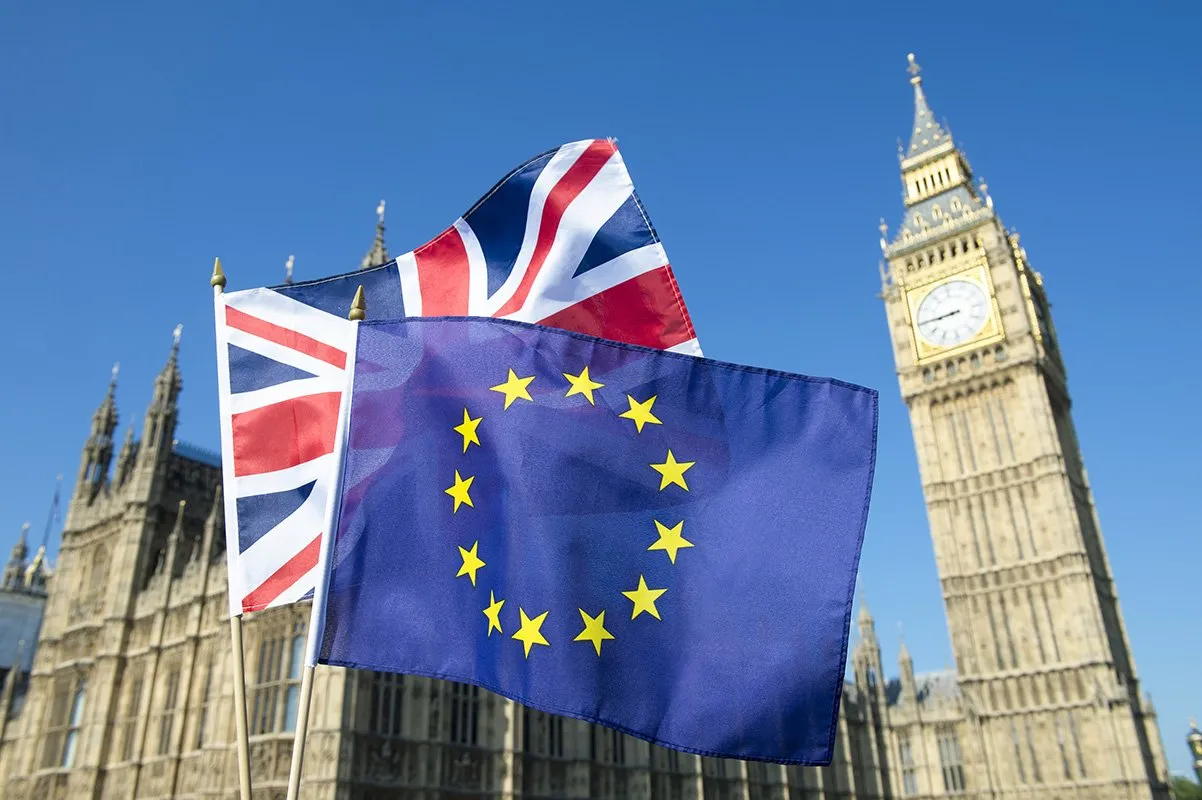
A family with the wrong members in control; that, perhaps, is as near as one can come to describing England in a phrase.
George Orwell
The fifth and final part of this Brexit series analyses the state of the nation and recommends ways forward, not just regarding Brexit, but more generally. Sadly, there is so much wrong with Britain that it is difficult to know where to start. Part 1 of the series began with the Conservative victory in 2015, but it is worth exploring a bit further back, starting when Gordon Brown became prime minister In 2007.
Halcyon days
In June 2007, Brown became PM. Our local Newcastle economy had an excellent decade; major local companies, particularly Northern Rock, Sage Group and Greggs, had expanded rapidly. There was a building boom and a net inflow of construction workers for the first time in living memory. The grim days of Auf Wiedersehen Pet seemed gone for good. The economy and real take-home pay had grown continuously for over a decade, and the future hadn’t seemed brighter for many years.
14 September 2007: I had taken my usual metro to Haymarket for a short walk to my office at Northumbria University. Passing by the local branch of Northern Rock, I noticed a huge and agitated queue. It was a bank run and a harbinger of what was to come. Initially, it seemed containable; my brother, who always comes over at Christmas from Dublin, seemed more amused than frightened about the bank run.
Brown and Alistair Darling handled the initial crisis well. There was considerable speculation about Brown calling a general election, as he was still highly popular and would almost certainly have won. Sadly, he did not; a sliding doors moment? A year almost to the day after Northern Rock, Lehman Brothers collapsed, triggering the 2008 global financial crisis (GFC), and we were in much more complex and dangerous territory.
Broken Britain
Broken Britain was a term that David Cameron first used to describe a perceived widespread state of social decay in the run-up to the 2010 GE. In retrospect, these were halcyon days, for example satisfaction with the NHS was never higher, but of course, the GFC hit the UK very hard and triggered the worst recession since WWII.
Cameron came across, with his ‘hug a hoodie‘ and ‘hug a huskie‘ messaging as a new sort of environmentally caring and kinder Tory. The Conservatives also have an undeserved reputation for being good for the economy (the exact opposite is true), and they somehow made it plausible that Labour caused the GFC. Prof Simon Wren-Lewis calls this their ability to gaslight much of the public Media Macro and explores it often in his excellent blog and in his book The Lies We Were Told.
The Conservatives hadn’t done quite enough to win the 2010 general election outright, with 306 seats, but something that went unnoticed by many was the rise of the Orange Book Lib Dems. The Orange Book was published in 2004. (One of the editors of the Orange Book was the multi-millionaire Paul Marshall, now of Unheard and GB News). Ideas about liberation through the small state, which may have shocked many Lib Dems in the boom years, moved into the mainstream in the age of austerity. This opened space for a Conservatrive coalition and the implementation of an extreme Thatcherite state-shrinking agenda. One significant carrot was the alternative vote referendum, but the broader picture is that they were played by the Conservatives, and the coalition was both a disaster for the Lib Dems (dropping from 57 to eight seats in the following GE) and the country in general.
The alternative vote (AV) referendum
One ray of hope was that one of the Lib Dem demands, an Alternative Vote referendum, was agreed. Whereas this was not PR, it was a considerable improvement on first past the post (FPTP) and far more democratic. It was virtually cost-free and simply meant voters would mark their ballot papers 1, 2, 3 etc, in order of preference rather than an X. If no candidate gets over 50% on first preference, the least popular candidate is eliminated and the next preference transferred to the remaining candidate. The process continues until one candidate gets over 50% of the vote, or a single candidate remains.
To get elected, a candidate must appeal to most voters. A ‘no-brainer’ I thought, but indeed, an act of parliament rather than a referendum was all that was needed? However, I felt it was a fantastic opportunity to move the dial slightly towards a more modern and participatory democracy.
The Conservatives hated the idea (FPTP usually works massively in their favour) and went full throttle on a disinformation campaign, claiming that the cost of AV was £250mn. This was, of course, a shamefaced lie, but they ran a very effective advertising campaign on that basis (example ad here), and the right-wing media, as ever, rowed in full throttle behind them. Complaints were made to the Electoral Commission and Advertising Standards Authority, but they were toothless and stated that they did not have powers to regulate individual adverts.
The result was a hammer blow. On a turnout of 42.2%: 68% ‘No’ and 32% ‘Yes’. Only ten of 440 local voting areas were 50%+: Oxford, Cambridge, Edinburgh Central and Glasgow Kelvin, and six in London.
The No to AV campaign was headed by Matthew Elliott who went on to be CEO of Vote Leave in the Brexit campaign. As barefaced dishonesty had worked so effectively and without any penalties, it was unsurprising similar tactics were used in the Brexit referendum.
Austerity and gaslighting
The origin of the GFC is well known and triggered by the failure of subprime mortgages in the US. It had nothing to do with the Labour government. In fact, the UK was in an excellent position. Brown was widely hailed internationally for his handling of the GFC and even made the People Who Mattered list in Time Magazine.
Ireland handled the initial phases of the GFC very badly, so much so in fact that an “I” was added to PIIGS, and was grouped with the poor-performing Southern European economies: Portugal, Italy, Greece and Spain. Ireland, which had, in a spectacular misjudgement, agreed to underwrite the debts of private sector banks without knowing their full extent, had to agree to a humiliating bail-out package in the form of €85bn in loans in 2010. It was a very tough time in Ireland, but by 2015, the economy had fully recovered and the next eight years have been economically among the best ever.
Sadly, not so in the UK. Broken Britain has become a reality as John Harris writes in the Guardian. The years since 2010 have been disastrous economically, with near-zero growth, stagnating productivity, take home pay and GDP per capita. What marginal gains there have been in terms of GDP have gone to the super-rich (top 1%). This devastating economic performance coincided with the formation of the coalition government.
Far from being a kinder, greener Conservative, Cameron turned out to be anything but. He was a right-wing Thatcherite to his core and saw the GFC as a once-in-a-lifetime opportunity to shrink the state and go further than even Thatcher dared.
There was an endless big lie that there was no alternative to austerity and that the profligacy of Labour had caused the GFC. This was repeated so often that even the media seemed to believe it. Bizarrely, even Labour gave up trying to point out that it was not responsible for the GFC. It was a frightening example of gaslighting. One expects the media to be biased against Labour, but one does not expect as Prof Simon Wren-Lewis writes: When the media is biased against the facts. He uses the ‘Shape of the Earth’ analogy – some say the earth is round, others flat. Believing austerity was necessary is equivalent to accepting the earth is flat.
Austerity was, of course, voodoo economics and is estimated to have cost the average household a loss conservatively estimated to be £4,000 by 2015. For those surviving on welfare, the cuts were vicious, resulting in over 330,000 excess deaths.
If the media has been capable of distorting reality by so much for so long in this case, are there other areas where it has done the same, and what does that tell us about the health of our democracy?
Simon Wren Lewis 2015
The wrong members in control
Brown and his recently deceased chancellor Alistair Darling were political heavyweights. Brown’s belated signing of the Lisbon Treaty behind closed doors wasn’t attractive but their handling of the major crisis of their tenure, the GFC, was exemplary. Sadly in 2010, all changed, and there has been a string of mediocre at best prime ministers.
Cameron could campaign in poetry but certainly couldn’t govern in prose. He started the discredited Hayekian-inspired austerity programme, which was a predictable disaster, and of course, agreed to the amateurishly run Brexit referendum, which will be a textbook example of how not to run one in years to come. He then ran away when the referendum was lost, leaving others to clear up the mess.
Theresa May at least, was hardworking and across the detail. A Tory to the core, she shunned cross-party support. Her obsession with immigration from her failure as home secretary to limit numbers to tens of thousands drove her to a rejection of freedom of movement (FoM) and a hard Brexit. The May/Robbins deal was however a decent compromise, given the very hard red lines, and I was surprised the EU agreed to it. Her disastrous 2017 general election campaign didn’t help, when she then had to rely on DUP support to govern. She did not have the political skills to get her deal through parliament and resigned as prime minister.
Boris Johnson was a charlatan, liar, and narcissist who cared only for himself, utterly unfit to run a small organisation, never mind becoming PM. All was obvious to those who knew him and those who cared to do the slightest background research. Many millions, including my brother-in-law, ‘believed in Boris’ and his ‘oven ready deal’, which led to an 80-seat majority in the 2019 general election. The Conservative Party eventually lost confidence in him because of his constant lies and utter ineptness as PM, but most importantly because he became an electoral liability. The depth of his incompetence was exposed dramatically by the Covid Inquiry.
Liz Truss seemed totally captured by the notorious far-right lobby group, the Institute of Economic Affairs, and in a sense, was peak Brexit. She was charmless, clueless and wholly unsuited to the job as PM. Her emergency budget tanked the economy, and she was famously outlasted by a lettuce.
Rishi Sunak appears rudderless and totally out of his depth politically. Initially, there were positive signs, with improving relationships with the EU, the approval of the Windsor Framework, the watering down of the retained EU law bill and rejoining Horizon. However, keeping the Rwanda scheme, U-turning on climate commitments and panicking on immigration is worrying. He has very poor political antennae, but in fairness the Conservative party is becoming ungovernable.
Ranking these mediocre PMs is an interesting parlour game. But the bigger picture is that the talent pool of the Tories is hardly puddle deep. It has become an odd mixture of far-right English nationalists, and those captured by oligarchs.
Cancerous Britain
Broken no longer seems a sufficiently strong term. Nothing seems to work. RAAC in schools, record NHS waiting lists, the worst staffing crisis in history, railway chaos, universities in crisis, cost-of-living crisis, housing crisis, record use of food banks, polluted rivers and coasts, the highest tax burden since the end of WWII. The list goes on and on. GDP per capita, productivity and take-home pay have flatlined since 2008. There is a lack of a coherent economic strategy.
The OBR forecast is grim and the Bank of England predicts low growth, high inflation and interest rates continuing for some time. Freedom of expression is under threat and Sunak is rolling back on net zero pledges.
The malign effect of dark money and shady right-wing lobby groups is becoming far more apparent. Britain is becoming a playground for oligarchs, as Peter Jukes of Byline Times and Peter Oborne of Double Down News point out eloquently. The electoral system badly needs reform, with less dark money and at least a move towards proportional representation. Sadly, the opposite is happening with massively increased spending limits, the London and all metro mayoral elections returned to ante-diluvian FPTP and voter ID designed to discriminate against young people (Jacob Rees-Mogg said the quiet bit out loud).
The press environment is becoming increasingly dominated by the far-right, with a revolving door between the Tories, 55 Tufton Street and the media. Tufton St stooges appear constantly on the BBC, e.g. on Question Time, with no explication of their origin, funding, or agenda. To add to the already right-wing bias, new stations such as GB News have arrived, which is apparently not a news station at all, so it is not subject to stringent OFCOM rules on impartiality.
Brexit is proving to be as much of an economic disaster as many predicted. The positive impact of the ‘world-class’ trade deals, such as the flagship CPTPP, has been downgraded from a miserly 0.08% of GDP to 0.04% in the long term. The adverse effects of leaving the EU, particularly the single market continue to mount and, at c 4% so far, dwarf and benefit from the other trade agreements. Losses to the average worker are now estimated at £10,700 per year in a recent Resolution Foundation report: Ending Stagnation.
One of the supposed “benefits” of Brexit was that abolishing FoM would reduce net immigration and push up wages. Not only is immigration at a record high (3x that of 2016), but it is dominated by India and Nigeria in a set of key shortage areas. Migrants can be paid 80% of the going rate, which is illegal within the EU, depressing wages even further. There are persuasive arguments that it is not just correlation, but causation and that Brexit virtually guaranteed increasing immigration. The Conservatives are now in panic mode on immigration, frightened that the racists among their xenophobic supporters will vote for the Reform Party and have introduced some panicky, ill-thought out, legislation.
The flagship Freeport programme, as pointed out by many, including Prof Richard Murphy are likely to be a disaster. They were entirely possible within the EU, and Cameron abolished them because they did not work. The new ones will be much larger than previous ones and likely to be even more damaging.
Diagnosis is straightforward, but cure is far more difficult
Since 2005, UK elections have consistently resulted in governments inimical to the self-interest of the electorate. One might jokingly say that the most profound change the UK needs is a different electorate.
- Media: The UK press has always had a right-wing bias, but it is getting far worse. The Telegraph used to be a paper of record; it now seems to be a posher version of a far-right tabloid, hysterically fighting culture wars. The BBC can no longer relied upon. Indeed, it is often a conduit for far-right lobby groups. New ultra-right channels such as GB News have arrived on the scene, and social media is getting worse rather than better. Leveson 2 would be a start, but it is clear that the media needs major reform, and there must be penalties for deliberately lying.
- Think Tanks: An entire ecosystem of far-right lobby groups loosely described as 55 Tufton St has grown like a cancer on the body politic. Funding is opaque, but most likely from American billionaires and other oligarchs. Far greater transparency is needed.
- Dark Money: Money is corrupting politics. Indeed, the Conservative party seems to be a vehicle to deliver what the oligarchs want, both in terms of policy and seats in the House of Lords. A total ban on foreign money, much stricter spending limits and greater transparency are needed. In Ireland, for example, there is state funding for parties and a ban on foreign donations. The legal maximum for anonymous donations is set at €100 and the annual maximum for all donors per annum is €6,350 per party.
- Revolving Door: There is a revolving door between Westminster, the Tufton St lobby groups, the right-wing media and the BBC, much funded by dark money. Far greater barriers are needed to keep a separation between these pillars. A good description of how it works is in James O’Brien’s book How They Broke Britain and in Arther Snell’s Behind the Lines podcast interview with him.
- FPTP/PR: As discussed in part 4, PR has many advantages; most obviously, large majorities with only around 40% of the vote would be impossible. Blair got his landslide in 1997 with 43.2% of the vote and Johnson with 43.6%. Blair got a majority in 2005 with 35.2%. With STV, the additional advantage is that it pulls candidates towards the centre and makes culture war and wedge issues less potent.
- Elective Dictatorship: A term coined by Lord Hailsham in the 1970s, alarmed that the executive was too powerful and could render parliament ineffective if the wrong people were in power. This was never more evident than under Johnson with attempted proroguing of parliament and ramming through the disastrous Johnson/Frost Brexit deal. Large majorities often produce worse rather than better democracy. PR would make this less likely.
- Written Constitution: In Britain, parliament is sovereign and can override any legislation produced by a previous parliament. This is dangerous as it relies on the “good chaps theory” of government. In the wrong hands, it is hazardous. There is no base law, and the UK relies on international conventions such as the ECHR and even these are detested by the far-right of the Tory Party. The UK badly needs a written constitution.
- House of Lords Reform: The HoL has often been one of the few bodies working effectively over the past few years in holding HMG to account. There are, however, major scandals such as cash for peerages and departing PMs being able to appoint cronies and others. One simple fix is to adopt the one-in-two-out system and to ensure the quality of the existing members is improved.
- Decentralisation: Far too much power is concentrated in Westminster. There is devolution of varying degrees in Northern Ireland, Scotland and Wales. England is also too dominant, with c. 85% of the UK population. The current structures don’t work for Scotland and NI in particular. Far greater federalisation is needed.
- Economy: The UK suffers from low growth, low productivity, low FDI and high inequality. There is a good analysis in the Resolution Foundation’s “Ending stagnation (A New Economic Strategy for Britain)” **(link), but one easy fix here: rejoining the Single Market.
- Join the EU: This will not cure all ills but should help reduce immigration, grow the UK economy, and, most importantly of all, ensure the UK is a “Rule of Law” country.
Re-applying to the EU
The UK is in a bad place at present. In addition to the seemingly total disintegration, there is a drift towards the populist right and searches for simple solutions for complex problems. Most terrifying of all is the Rwanda Policy, which is unworkable, insane and moving the UK directly towards a rogue far-right state. It is not rational; even if flights get off the ground, there is no evidence it will act as a deterrent, and it will not “stop the boats”. It is designed to appeal to the gaslighted readers of the right-wing press and stop the drift towards Reform UK. The only good thing is that it is ripping the Tory Party apart, and it is so obviously diseased that the UK can hopefully step back from the brink.
There is an increasing realisation that Brexit has been an abject failure and unworkable. However, the main political parties are frightened to admit this. It won’t be politically possible until Labour’s second term (if it gets one).
The UK needs to put its own house in order and realise that it is not an exceptional world-leading country that inferior continentals should welcome back as they badly need good governance as provided by the Westminster model. Cakeism, in the form of wanting something for nothing and expecting the EU to allow FoM for British citizens without reciprocating, is counterproductive. Equally annoying are some remainers who expect the EU to change to appease British fears. The salience of Brexit in the EU is low. It has moved on.
It had been assumed that Brexit would be a lose-lose event, with both Britain and the EU being negatively affected. However, the Johnson/Frost deal was so asymmetrically favourable to the EU that it is content with the status quo. The last thing the EU needs is a larger version of Hungary or a ping-pong member, which will demand special treatment and even then Brexit again within a decade.
If they think of the UK at all, many in the EU see it as a former liability rather than a former asset. Much of the behaviour of HMG, particularly during the Johnson and Truss era, seemed deliberately designed to poison the well and make returning to the EU impossible. For some, destroying the EU was the ultimate goal. The UKIP-led back-turning on the European Youth Orchestra in the EU Parliament was sickening, petty, and arguably out of the Nazi playbook. It seems that the NI protocol was negotiated in bad faith with the belief an international treaty could be ripped up in a limited and specific way. Sunak, to be fair, has rebuilt a modicum of trust after the nadir of the Johnson/Truss era.
The argument that the UK was a significant net contributor was always overstated (it was 8th in per capita terms). And given that in PPP terms, the GDP per capita is already below the EU average and likely to drop further, it is likely to be a net recipient if it rejoins. The UK has, however, much to offer if the “family” can consistently get the right people in charge.
Applying to join the EU is straightforward and will be done via Article 49 and the Copenhagen Criteria, which include:
- Stability of institutions guaranteeing democracy, the rule of law, human rights and respect for and protection of minorities;
- The ability to take on the obligations of membership, including the capacity to effectively implement the rules, standards and policies that make up the body of EU law (the ‘acquis’), and adherence to the aims of political, economic and monetary union.
The EU is becoming less and less happy with bespoke membership deals and whereas there may be some minor derogations it will mean no rebate and almost certainly include joining the Euro and full Schengen membership. This may be difficult for the UK.
It may well be that full membership is not for the UK in the immediate future, and a step-by-step approach is better. The Windsor Framework and Horizon are steps in the right direction. Another obvious step is keeping dynamically aligned with EU standards. The UKCA mark has been a predictable failure. There is little or no benefit in setting up independent standards where EU ones exist and which UK exporters to the EU must adhere to.
The best way forward at present is probably gradual baby-step alignment, an approach championed by the European Movement UK headed by Mike Galsworthy (recent interview here). Joining Erasmus+ would be an excellent next step.
Against that is the extreme urgency of now. Without rejoining the SM, it isn’t easy to see how the UK economy can be accelerated out of the crawler lane.
The likelihood is that Labour will win the next GE, possibly by a landslide. The fear is that we will get a more competent version of the same, with very little change. Sadly, the UK is in such a bad state that it will be very difficult to turn around. Without curbing the power of the oligarchs/billionaire-owned Media/Tufton Street lobby groups, gaslighting will continue and the right-wing media will do everything it can to discredit the government. Labour will be an easy target when things don’t get better quickly. Unless PR is introduced, it is possible Labour will serve only one term, and the UK will be in an even worse place in five years.
Conclusion
Rejoining the EU is straightforward in principle. If it happens, it will be however very much on the EU’s terms, as the UK is in a very weak position. Even though polls are moving in the right direction, many, I suspect, think it will be rejoining on old terms, with opt-outs on the Euro, Schengen and the Rebate. This is unlikely, and rejoining may be a harder sell than many remainers assume. Domestic reforms are more pressing. Rejoining the Single Market via some form of EEA structure is the most likely move in the near term.
Things can turn around. The UK was in a much better place 15 years ago and may get there again.
Ireland is in a good place today, and the past 50y very positive. However, the transformation was not monotonic. The 1980s were dreadful. In 1988, The Economist magazine ran an article on Ireland titled “The poorest of the rich.” The title was well-deserved. That year, Irish per capita GDP was just 70% of UK’s. The unemployment rate was 16.2%, and young graduates, the brightest and the best, were leaving in droves. Government debt was 85% of GDP, and the country seemed to be going bankrupt. Just two years later, the Celtic Tiger took off, and 18 years of turbocharged growth transformed the country. (Much of that success was due to single-market membership).
Britain is in a different place, and success is not guaranteed. Given the current opinion polls, a Labour government seems highly likely at the next GE (meta-analysis here: implosion in blue). A full term will be needed to steady the ship. Real change can happen if Labour can successfully survive a second term. Otherwise, we may have an even more right-wing Tory government in six years and continuing stagnation and relative decline.
This article was originally published at Progressive Pulse.



