



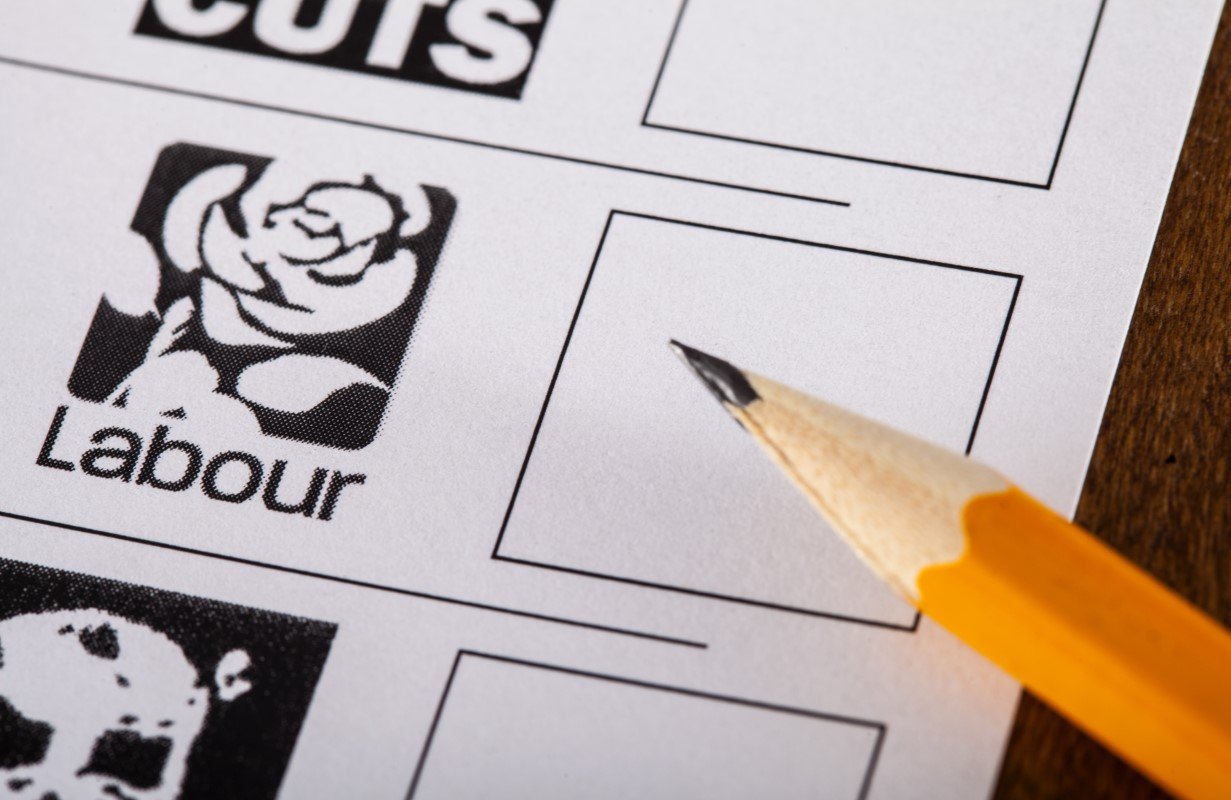
After the recent local elections the Labour and Conservative Parties are licking their wounds and wondering what they need to do next. But I want to draw some wider conclusions from these results.
It certainly was a wipe-out for Labour in County Durham. I can remember when Labour had a large majority on the County Council, and people made remarks about “weighing” rather than counting the votes, and if you put up a donkey with a red rosette he would win. Not so now. Labour is down to from 54 to four seats, Reform has an absolute majority of 65. Hard to believe.
Anti – Labour vote
I live in County Durham, and both the I newspaper and the BBC have visited Peterlee, the town where I live, to find out why this happened. All the answers were about the present government’s performance, and how it did not seem to understand a deprived area like County Durham with measures like withdrawing the Winter Fuel Payments. It was not the actual financial loss of taking away the benefit (there was also a substantial increase in the old age pension) but what it symbolised. Not caring about the less well off.
None of the answers were about the performance of the County Council or individual councillors. People were treating the whole exercise as a massive public opinion poll about the government. Nowhere was this more obvious than in the local town elections, which do not get reported elsewhere. The Town Council has had many problems recently, but this was not reflected in the voting. There was no debate about how these could be addressed, and only Labour put forward positive suggestions. The result – people voted “anyone but Labour” and Labour only secured two uncontested seats.
As a resident this disappointed me. I had hoped that the Town Council would get to grips with some of its problems, but the electorate was determined simply to send an “anti-Labour” message.
The problems for Reform and for local government
Reform will find that once they get established at Durham, it will not be so easy to achieve the results they hoped. Achieving massive savings will not be easy. Much of the services which the County Council provides are laid down by law, such as providing Social Care and dealing with SEND students. It is not well known that almost two thirds of local government spending is on Social Care (up from half in 2010), and that the number of children needing Special Needs plans has increased by 140% since 2015. The only way to save money on these provisions is to skimp on spending, which many think is happening with social care. There is certainly not the scope to make the massive savings Farage talks about. All that happens is that services the council is not obliged to provide, such as supporting the arts, get reduced. The Gala Theatre, run by the County Council, is now closed two days a week. If Reform is true to its promises we will see much more economising on services, and possibly a reduction or even abolition of services which the council is not obliged to provide. Durham County Council already has a shortfall of £2 million in its budget I am told.
The problems with our system of local government are twofold. One is that much of its work is the administration of services which are decided upon elsewhere, such as social care, and the second is lack of resources. It is difficult for a local authority to raise additional funds itself, and it is obliged to rely on funding from central government. The community charge system is based on property values and means poorer areas cannot raise so much money as better off ones. A senior council officer once told me that a 1% increase in rates would bring in twice as much in Surrey as in Durham. Thus it is very difficult for a local authority to take initiatives which address local needs such providing a good public transport systemin Durham and the North East. The mayor and local authorities have to go cap in hand to the government,
What are the solutions?
If we are to move to a more thriving system of local government, which engages better with local populations, and has elections which are about local issues rather than simply public opinion polls on the government, then I think two things have to be done:
Firstly social care has to become a nationally funded and administered service, possibly linked with the NHS. The same standards would prevail all over the country. Local Authorities could be involved, as they presently are with the NHS, but the funding should be done centrally.
Secondly the way local government is funded needs to be reformed. There is already a debate going on within the Labour Party about Council Tax reform. The present system is based on 1991 propert values, and is unfair to poorer communities. The government needs to grasp this nettle and sort it out. Otherwise, we will never truly achieve “levelling up”.
I look forward to a time in the future when parties present programmes debating local issues and choices as the old LCC in London and Joseph Chamberlain’s Birmingham did in the early 20th century.. Then we might have local elections that were about local issues, not national opinion polls.

CLICK HERE TO DONATE TO OUR CROWDFUNDER
HELP US BECOME STRONGER SO THAT WE CAN CONTINUE TO DELIVER POWERFUL CITIZEN JOURNALISM!




