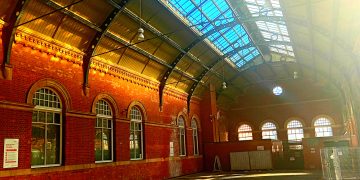

North East Mayor Kim McGuinness has condemned as “madness” the decision by bus operator Arriva North East not to serve the new Newsham Station in Blyth.
The station, reopened in March this year as part of the £100 million Northumberland Line project, includes a purpose-built bus stop beside its eastern car park – but Arriva services are not calling there.

Mayor McGuinness said buses “absolutely should be stopping” at Newsham so passengers can “get from A to B without any unnecessary hassle.”
Arriva North East defended its position, saying its services already stop “within a short walk of the station” and that diverting routes into the station site would “add time to journeys without much benefit.”
According to the Local Democracy Reporting Service, the Arriva X8 stops at nearby Blagdon Drive and the X30 to Newcastle at Park Farm Villas – but neither makes the short detour to the station itself. While both stops are relatively close to the railway line, the walk can prove difficult for passengers with mobility issues.
Integrated transport systems
In many European countries, integrated transport networks link trams, railways, buses and car parks to make public transport as easy and efficient as possible – reducing reliance on cars and cutting emissions.
The Tyne and Wear Metro, built in the late 1970s and early 1980s, was originally designed as part of just such a joined-up system. But that vision was undermined when the Thatcher government deregulated bus services in 1986, fragmenting the network and weakening coordination between operators.
The consequences are still felt today, with disjointed and inefficient systems across much of the UK. In regions like the North East, local authorities and campaigners are now pushing hard to rebuild an integrated public transport system – for the benefit of both passengers and the environment.
The problems with a privatised transport system
Alistair Ford from the North East Public Transport Users’ Group (NEPTUG) said the Newsham situation “sums up in microcosm all of the problems with the UK’s fragmented, privatised transport system.”
“Transport should be a public good, run for the benefit of the people of the region, to support our economy and to provide environmental benefits,” he said. “Instead, our bus services are run for private profit, with bus companies deciding on routes and times based on what is best for them and their shareholders, not passengers.
“NEPTUG campaigns for integrated transport, where local people can switch easily between bus, Metro, rail and ferry without worrying about complex ticketing and with seamless transitions between modes. We agree with Mayor McGuinness that it is ‘madness’ that a brand-new railway station doesn’t allow passengers to switch between rail and bus.
Bus franchising will address this problem, but we call on Arriva to see sense and help passengers connect at Newsham.”


Towards an integrated transport system
The situation at Newsham highlights the importance of better coordination between rail and bus services across the North East. The goal is to make public transport easier to use, with simple interchanges and unified ticketing across buses, Metro and rail.
Large car parks along the new Northumberland Line already support park-and-ride travel, helping to reduce congestion and car use into city centres such as Newcastle. On a visit to the station, the new car park was full and overflowing, testimony to the popularity of the new rail line. But campaigners say operators like Arriva need to integrate their services more closely in order to maximise the benefits of this important infrastructure investment in the region.