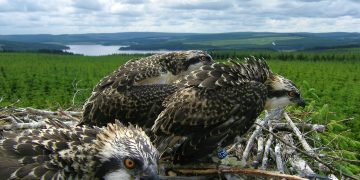

“The land is mine and you are but aliens and my tenants. Throughout the country that you hold as a possession, you must provide for the redemption of the land.” (Leviticus. 25:23-24)
“ We do not inherit the Earth from our Ancestors; we borrow it from our children” (Traditional proverb)
Chris Howson, chaplain at Sunderland University recently spoke about the ways that liberation theology links with our need to care for the environment.
The cry of the earth
There can be no doubt that the earth and its systems are struggling to cope with the pressures that humanity is placing on them. In June it was reported that in a stark warning from more than 60 of the world’s leading climate scientists in the most up-to-date assessment of the state of global warming, it had been argued that Earth could be doomed to break through the symbolic 1.50c warming limit by 2028 at current levels of carbon dioxide emissions.
It has indeed been argued that we have already breached the 1.5oc limit. The UN secretary general, António Guterres, said that the failure to limit global heating to 1.5C is a “moral failure and deadly negligence”, at the opening session of the Cop30 climate summit in the Brazilian city of Belém.
What does breaching 1.5o c mean for humanity?
Breaching the 1.50c rise in global average temperatures has led to warnings that there could be serious consequences for humanity and other life on the planet.
The Intergovernmental Panel on Climate Change has warned that warming of just 1.50c means that nearly 1 billion people would be exposed to desertification and water stress, which would cost as much as $63 billion in residual damages to major crops and adaptation.
Meanwhile 14% of the world’s species would be put at risk of extinction, coral reefs would decline by 70-90%, and the distribution of malaria would expand. Additionally, about 24% more people would have to contend with flooding, compared to historical levels.
It has also been noted that, “these same climate impacts would intensify if we exceed 1.5 degrees of warming. For instance, relative to 1.5 degrees C of warming, 2 degrees C of warming is expected to cause twice as many heat waves in Southern Africa, 1.6 times as much area burnt by wildfires in Mediterranean Europe, and cost $17 billion more globally in residual damage and adaptation for major crops. 2 degrees C of warming would also functionally destroy coral reefs. Extreme heatwaves would become increasingly common, creating dire impacts on human health and productivity, especially in South Asian and African cities”.
Stewardship not domination
Consequently, humanity is searching for new ways of thinking about the environment and new ways in which we can relate to it. In recent decades there has been an increase in the promotion of the concept of humanity becoming good stewards to the world and not using our position and status to dominate the Earth and just do whatever we want with it, without considering the consequences.
This has included many people from the Judeo-Christian tradition, who have begun to read scripture in ways that are bringing out new meanings in response to the environmental crises we are living through, with a greater emphasis on environmental stewardship and caring for the environment.
In this respect it has been argued that “environmental stewardship is based on the concept that the Earth Community is an invaluable gift from God for which we are the caretakers. God entrusted humans to be the earth’s stewards and gave the honour and privilege of managing and administering God’s creation efficiently. Biblical texts strongly reinforce the consistent affiliation between ecology and creator and also assist in curbing the spirit of greed and materialism which is posing a threat to ecology.
“… a full and abundant eternal and earthly life will depend on a change of heart in humanity’s attitude towards nature and restoration of the right relationship within Earth Community through ecological sustenance and conservation.”
Looking through an Eco liberationist lens
It is against this background that Chris Howson, chaplain at Sunderland university was one of three speakers who spoke recently at an event organised by Green Christian and Christian Climate Action about looking at the way we care for the earth through what is described as an Eco liberationist lens, reflecting on liberation theology from Gustavo Gutierrez and others as we approach the start of time of COP30 in Belem in Brazil.
Chris Howson
Chris Howson is a University of Sunderland chaplain and he gave us an outline of the ways that liberation theology links with environmentalism. He recalled working on the climate back at the time of the 1992 Rio Earth Summit and went to a rival summit to Rio, in Germany at Freiburg in 1992, when a young activist.
The initial movements on liberation theology had very little to say about environmentalism, being born out of class and capitalism and a desire to tell of Jesus’ teachings being good news to the poor. It also involved practical help being given to people suffering terrible poverty as a result of organised colonial and post-colonial activity by certain governments and other powerful actors.
Liberation theology
In the 1980’s liberation theology began to recognise the importance of the environment, through the eco-feminist movement and activists and writers such as Dorothy Solle and Sally Mcfague who challenged anthropocentric theology. The book Cry of the Earth recognised connections between terrible poverty and ecological crises, both being caused by capitalism and the workings of market and financial institutions.
By the 1990’s many developing countries had huge debt after they were forced to open up to markets at the expense of indigenous and ecological needs. Chris recalled meeting an indigenous Brazilian activist with no legs who had lost their legs under a bulldozer, trying to stop the destruction of the rainforest. They were not given a voice in Rio, and indeed through the whole COP movement indigenous voices have been excluded, while lobbyists from fossil fuel companies drowned their voices out.
Subsequently, the idea of ecological sin has developed along with the need for individuals and institutions to change and the need for theological rage and for people and churches to be righteously angry about what is being done to the planet, while too many worry simply about their own security.
Liberation theology is about how we enact solidarity with the poor and the earth itself. We must let people know what is happening and who is doing it and who is turning a blind eye to environmental damage. Meanwhile it is also important to remember that some institutions are challenging things, and deserve support.
We must also consider our own behaviour in areas such as energy use, transport use, and consider churches who don’t think enough about public transport for people coming to churches.
Indeed, there are big structural issues that we need to be involved in.
Chris also reminded us that we need to look after each other at a time of enormous climate grief and immensely powerful forces always appear to have the upper hand and can make us feel powerless, it is important to remember that this is how it must have felt for Jesus. He had only a few followers and was living under a powerful and oppressive empire. But his priorities were about changing the balance of power through non-violence, undermining the power of the opponent through love and prayer. Yes, imperial might exacted a terrible price as Jesus was left to hang on the cross, but Christianity has the belief in resurrection and that God is on the side of the oppressed and that love and life can overcome evil. This helps us to work for environmental justice alongside class and other justice.
Liberating the earth, liberating ourselves
It seems right that liberation theology is now increasingly concerned with environmental justice. As was also noted at the event, to look after people we must also look after the land on which they live, and we must ensure that any green transition is fair to all across the world including in the global south. We must revive the idea of humanity acting as good stewards for the earth and in liberating the earth from environmental damage, we can also liberate ourselves from oppression by others and from the worst horrors of environmental damage.
We have seen the way that the climate is changing at a drastic rate, and we know the consequences of not acting. Time is running out.

CLICK HERE TO DONATE TO OUR CROWDFUNDER
HELP US BECOME STRONGER SO THAT WE CAN CONTINUE TO DELIVER POWERFUL CITIZEN JOURNALISM!